Ideas, argued out in small rooms.
The curriculum is deliberately broad before it begins to narrow.
Pupils encounter Latin, three sciences, two modern languages and a wide range of other subjects before they make their GCSE choices. By the time they specialise, they have had the opportunity to discover what genuinely interests them.
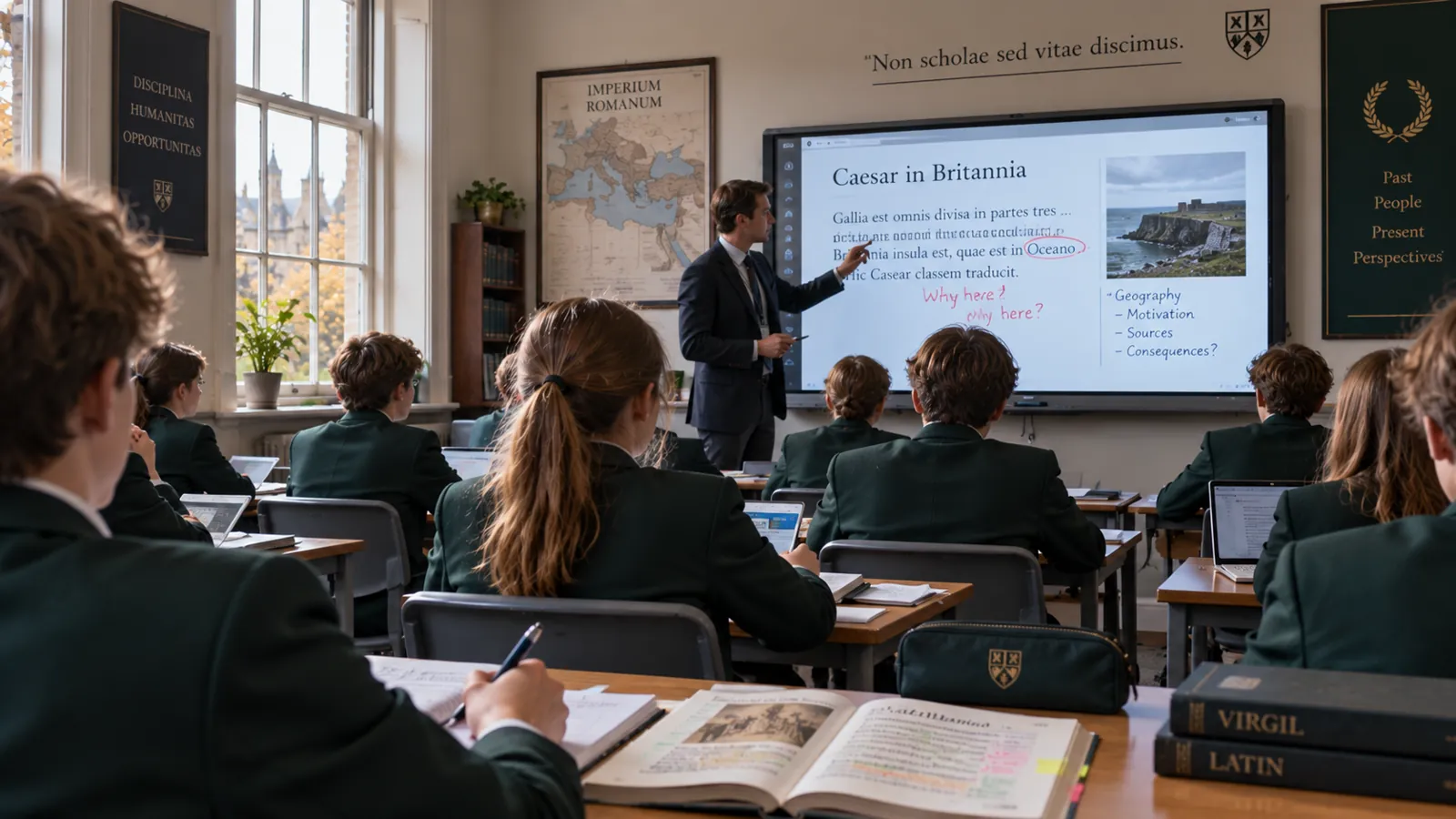
The curriculum
The First and Second Forms study 17 subjects, taught by specialists from the beginning.
In the Third Form, pupils add a second modern language, philosophy and computing before choosing their GCSE subjects.
Fourth and Fifth Form pupils take ten GCSEs, including English, mathematics, a language and at least two sciences.
In the Sixth Form, pupils take three or four A levels and almost all complete an Extended Project, supervised one-to-one, based on a question of their own.
Recent projects have explored the acoustics of the chapel, whether Ovid should be taught to 14-year-olds and the economics of the school's farm shop.
- English
- Mathematics
- Latin
- Greek
- French
- Spanish
- German
- Physics
- Chemistry
- Biology
- History
- Geography
- Theology and Philosophy
- Economics
- Politics
- Art
- Music
- Drama
- Design
- Computing
- Physical Education
Stage by stage
- First and Second Form
Ages 11–13. A broad curriculum, good habits and the beginning of independent study. Every pupil learns an instrument for at least a year.
- Third Form
Age 13–14. A year of trying new things, including a second language, philosophy, computing and the Third Form play.
- Fourth and Fifth Form
Ages 14–16. Ten GCSEs, three afternoons of games each week and the Duke of Edinburgh's Award at Bronze and Silver.
- Sixth Form
Ages 16–18. Three or four A levels, the Extended Project, seminars of nine or fewer and a study centre open until 21.00.
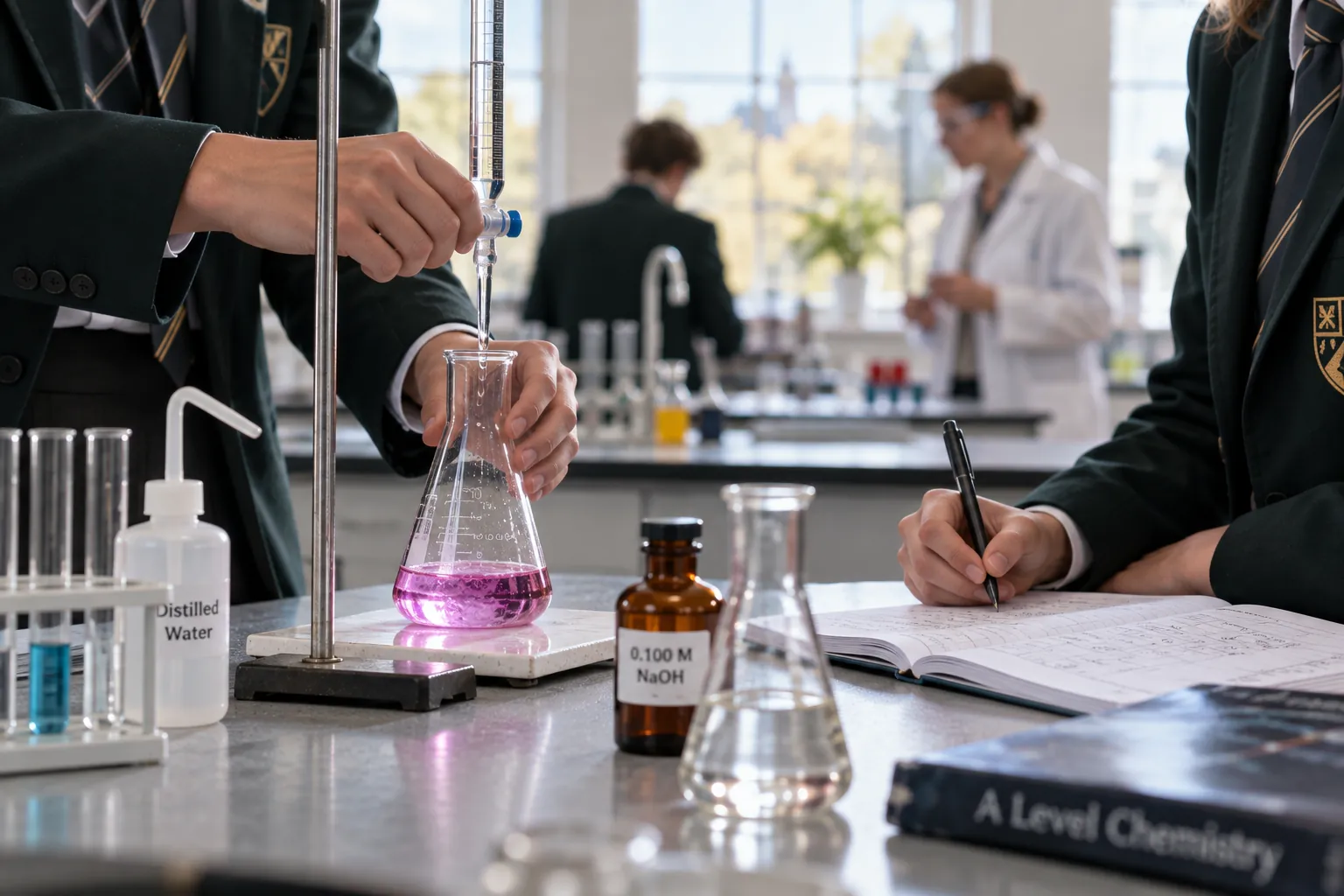
Practical, from the first term.
Science has been part of Aldergate from the beginning.
The Brooke Building has 14 laboratories, with one technician for every two laboratories, and every pupil is expected to take part in regular practical work.
Sixth Form scientists work in research pairs with a member of staff on year-long investigations. They present their findings to the school at the end of the year. Sometimes they are wrong. Learning why is part of the point.
Open until nine. Partly run by pupils.
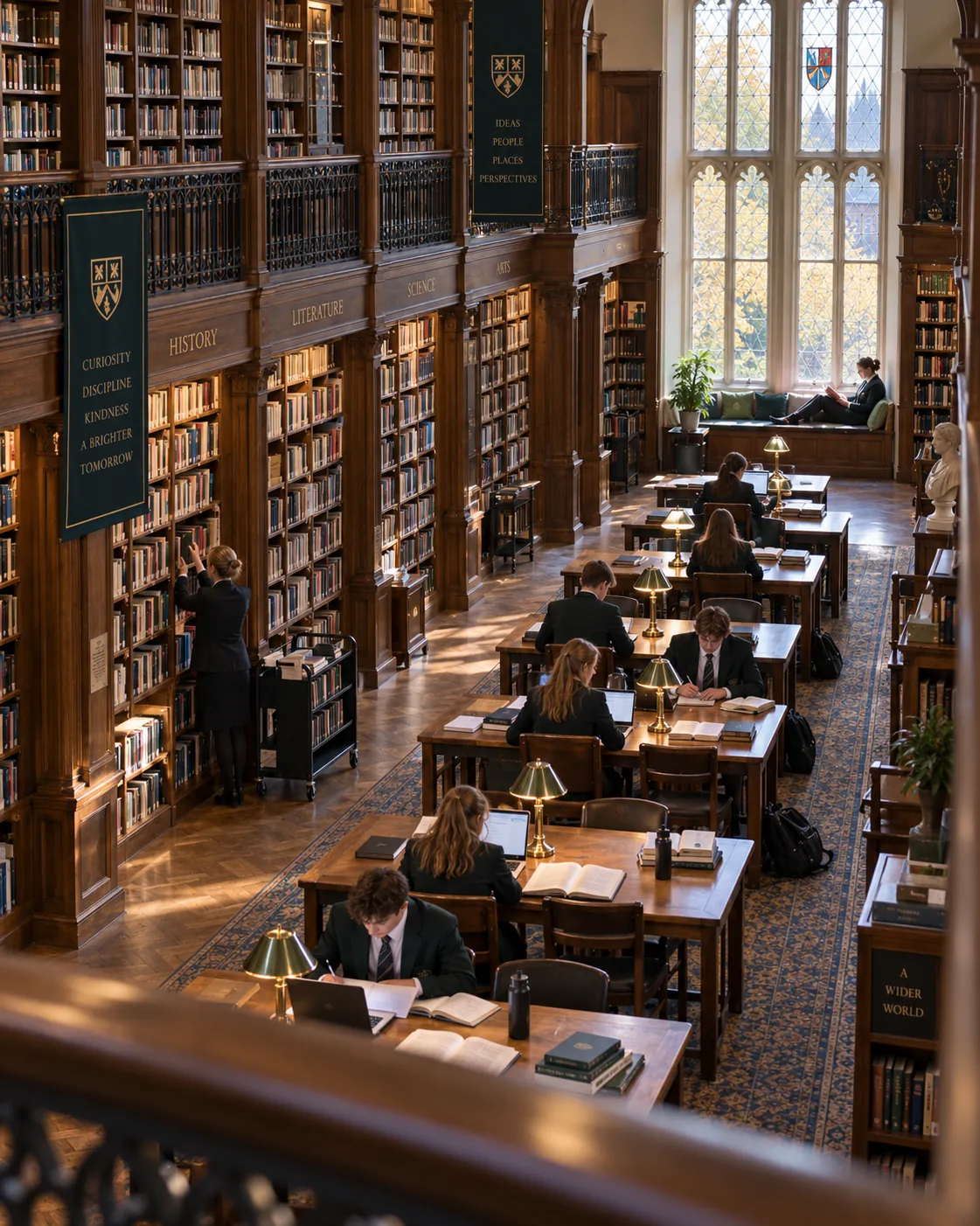
40,000 books across two floors, a Chartered Librarian and a pupil committee involved in deciding what the library buys.
It is one of the quietest rooms in the school and one of the busiest during examinations.
The archive is on the upper floor, including the first admissions register. Sixth Form pupils are taught how to work with the original documents.
Nobody here is impressed by a right answer arrived at without thinking.
Mr Daniel Okafor, Deputy Head Academic
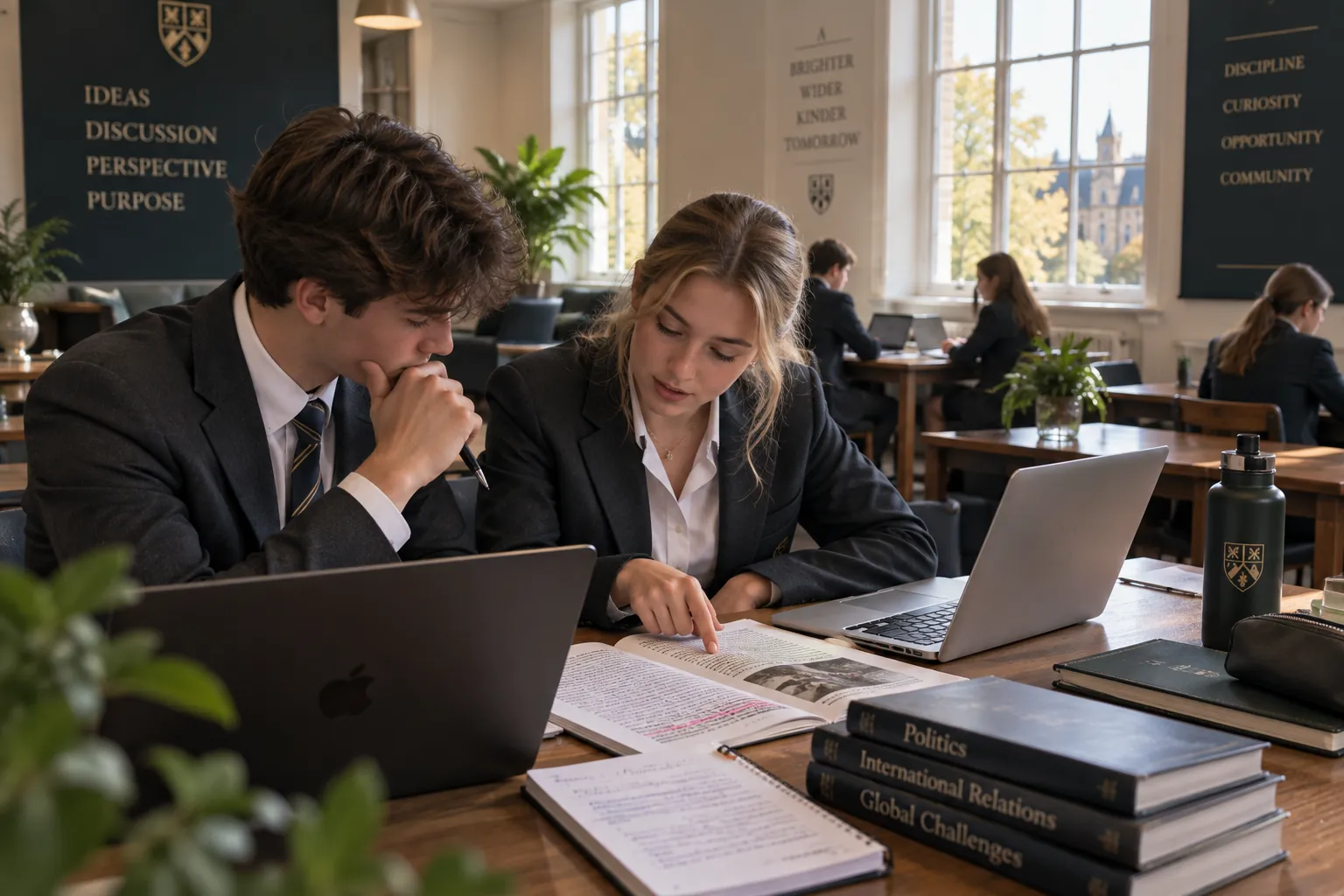
Independence, with people who notice.
Sixth Form pupils have their own centre, visiting academics, a more flexible timetable and increasing responsibility for managing their own time.
They also have a tutor who knows them well enough to notice when something isn't quite right.
In 2026, 62% of A level grades were A* or A. Twenty-one leavers took places at Oxford, Cambridge or medical school, while others progressed to conservatoires, art schools and apprenticeships.
The full destinations list is published each autumn.
Support and stretch
Learning support. A team of five, including specialist teachers for dyslexia and English as an additional language. Support is timetabled rather than fitted in around everything else.
Scholars' programme. Academic scholars meet weekly for a seminar that sits outside the examination curriculum. This term's subject is the history of the number zero.
Oxbridge and medicine. Preparation begins in the Lower Sixth, including mock interviews with former pupils now studying in those fields.